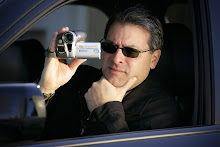
Were you a cop?
I always wanted to be a PI.
Are you spying on me?
I’d make a good PI, I followed my husband once.
Do you drive a red Ferrari?
Do you get a lot of chicks?
Are you like Rockford?
Are you like Magnum?
Do you carry a gun?
Do you carry a badge?
I want to do what you do. Fun!
Do you have a Pee-cup in your car?
What did you major in to become a PI?
How big is your lens?
Can you find my High School girlfriend?... Not that I still got a thing for her.
Do you have law enforcement background?
You should write a book.
What is the difference between a PI and a Private Dick?
How can I become a PI?
Do I need a license to become a PI?
Don’t you need to be a cop first?
Don’t women make better PI’s?
Can you arrest people?
Can I see your handcuffs?
How do I get a job as a Private Investigator?
Tell me about your equipment?
Did you go to PI School?
Can you get me my government record?
Good cop or bad cop?
Shouldn't I just use the internet?
Can you find my mom’s anonymous sperm donor?
I was a product of a one night stand and my mom didn’t know the guy’s name. Can you find him anyway?
What’s Pro Bono?
You mean I have to pay for this!
I think there is a bug in my apartment.
I think someone planted a bug in my head.
I can beat a polygraph test!
Can you tap my boyfriend’s phone?
Do you have a blonde undercover decoy with big boobs?
Why does that plastic cup in your glove compartment smell like urine?
Jay Rosenzweig
cali-pi.com
Thursday, October 16, 2014


Sunday, January 23, 2011
New Website Helps Consumers Find Public Records
There is finally a website that answers all the questions about finding public records. Public Records 101.com was formed to help consumers find public records for topics such as how to find people, how to find arrest records, finding criminal records, birth, marriage and death records . Whether these public records are online or offline, PublicRecords101.com has articles that cover most public records topics and also has a public records forum where registered users can ask questions about where to find public records.
PublicRecords101.com is the creation of Jay Rosenzweig, a web entrepreneur and licensed private investigator who is known for creating the public records finder websites, FreePRF.com and PublicRecordFinder.com. "I wanted to create a basic public records site that can help a novice who has no idea how to and where to find public records, obtain that information free of charge," explains Jay.
For example, PublicRecords101.com has an article on where to find every website in the United States that has links to outstanding arrest warrants. "Most consumers are under the impression that arrest warrants are not public records. There are over 100 law enforcement, city and county websites that list outstanding arrest warrants and all these sites are free,"states Jay.
PublicRecords101.com is already at the top of the search engines for the pertinent keywords for public records help. It is anticipated with Jay's track record that PublicRecords101.com will be one of the leading resources on the web for getting help for finding public records.
PublicRecords101.com is the creation of Jay Rosenzweig, a web entrepreneur and licensed private investigator who is known for creating the public records finder websites, FreePRF.com and PublicRecordFinder.com. "I wanted to create a basic public records site that can help a novice who has no idea how to and where to find public records, obtain that information free of charge," explains Jay.
For example, PublicRecords101.com has an article on where to find every website in the United States that has links to outstanding arrest warrants. "Most consumers are under the impression that arrest warrants are not public records. There are over 100 law enforcement, city and county websites that list outstanding arrest warrants and all these sites are free,"states Jay.
PublicRecords101.com is already at the top of the search engines for the pertinent keywords for public records help. It is anticipated with Jay's track record that PublicRecords101.com will be one of the leading resources on the web for getting help for finding public records.
Tuesday, October 21, 2008
How To Choose The Right Private Investigator
First, make sure the investigator you hire is licensed in the state where their business is located. Some states do not require a private investigators' license. However, in California a license is required. I suggest prior to hiring a California private investigator, look up their license information at the State licensing bureau's website - BSIS. This site tells you how long the private investigator has been licensed, It also tells you whether there has been any discipline against the investigator.
The next step is to find a private investigator who is right for your needs. For example, if you have a situation where infidelity is the issue, then hire a surveillance specialist. Hiring an investigator who conducts bug sweeps and background investigations is not the right investigator for that situation.
Make sure the firm you hire (if found on the web) has a biography or "about us" section on their website. Many firms do not list the owner's name or anything about his or her background. I think it's very important to list biography information. It gives you an idea of what the investigator's background is all about and whether he or she is qualified to handle your case.
I believe it's important that the private investigator you hire is a member of a viable professional investigators' association. In California, the most well known, and largest association is the California Association of Licensed Investigators (CALI). It's also important that the private investigator you hire maintains continuing education. CALI has a Certified Professional Investigator program that requires 4 credits (24 hours) of continuing education every two years.
There are other questions people ask themselves before hiring a private investigator. The most common question is "Why can't I conduct my own investigation and save money?" There is an old saying, "He who represents himself has a fool for a client." This saying also applies to investigation. There are many reasons not to conduct your own detective work. Some examples are: You are bias when you do your own investigation; you cannot be objective; you cannot be an independent witness if you are called to testify. The most important reason not to conduct your own investigation is that you do not have the training or expertise to know what to look for, where to find the information and how to preserve the evidence or information.
I would be glad to answer any questions you may have about private investigation. Please do not hesitate to contact my office.
Jay Rosenzweig
Cali-Pi.com
The next step is to find a private investigator who is right for your needs. For example, if you have a situation where infidelity is the issue, then hire a surveillance specialist. Hiring an investigator who conducts bug sweeps and background investigations is not the right investigator for that situation.
Make sure the firm you hire (if found on the web) has a biography or "about us" section on their website. Many firms do not list the owner's name or anything about his or her background. I think it's very important to list biography information. It gives you an idea of what the investigator's background is all about and whether he or she is qualified to handle your case.
I believe it's important that the private investigator you hire is a member of a viable professional investigators' association. In California, the most well known, and largest association is the California Association of Licensed Investigators (CALI). It's also important that the private investigator you hire maintains continuing education. CALI has a Certified Professional Investigator program that requires 4 credits (24 hours) of continuing education every two years.
There are other questions people ask themselves before hiring a private investigator. The most common question is "Why can't I conduct my own investigation and save money?" There is an old saying, "He who represents himself has a fool for a client." This saying also applies to investigation. There are many reasons not to conduct your own detective work. Some examples are: You are bias when you do your own investigation; you cannot be objective; you cannot be an independent witness if you are called to testify. The most important reason not to conduct your own investigation is that you do not have the training or expertise to know what to look for, where to find the information and how to preserve the evidence or information.
I would be glad to answer any questions you may have about private investigation. Please do not hesitate to contact my office.
Jay Rosenzweig
Cali-Pi.com
Tuesday, May 15, 2007
Signs of a Cheating Spouse
When I receive a call from someone who thinks their spouse is cheating on them, it's about a 95% chance they are being cheated on.
California is a no-fault divorce state, so infidelity really has no affect on a divorce case. Nevertheless, my clients still want that "Peace of Mind" by confirming whether their spouse is really having an affair and with whom.
So here are the basic signs of a cheating spouse:
1) When your spouse does not tell you where they were for the past 4 hours after leaving work (on an ongoing basis). This is very common among cheaters. They tell you that it's none of your business.
2) Lack of affection shown by your spouse. This is not necessarily a sure sign of a cheater, but if all of sudden, after a healthy love life with your spouse all the passion stops, then you must wonder if there is another person.
3) When they spend less and less time with you and your children. This is the biggest sign of a cheating spouse or at least a spouse who has absolutely no interest in continuing their family relationship to make it stronger.
4) There are the obvious signs: Lipstick on the collar, the smell of someone else's perfume or cologne on their clothing or long blonde hair on the passenger seat of the car.
5) My favorite sign (based on the calls from clients) is condoms in the car. Yes, people are that stupid. Especially when one or both spouses are fixed.
Now, there are many lists on the web of "cheating spouse signs." Based on my expertise as an investigator, I do not believe some of these other alleged signs are valid. For example, if your spouse, all of a sudden, wants to wear thong undergarments, that does not mean he/she is having an affair. If your spouse wants to buy better clothes, that does not necessarily mean they are having an affair.
I believe communication with your spouse is the most important factor in your relationship in determining whether an affair is taking place. If you truly believe your spouse is having an affair or cheating on you, then most likely it's true.
Who Is Your Spouse Having An Affair With?
1) A co-worker or supervisor/boss. This is the most common person a spouse would be having an affair with according to our previous investigation results.
2) Someone they met on the internet. This is a growing trend with the advancements in technology.
3) An old flame from before they were married.
4) Someone they met at the gym where they work out. It could be someone they work out with or even their personal trainer.
If you do not have any clue who your spouse may be having an affair with, I suggest hiring a licensed private investigator to follow your spouse. The fees to hire an investigator start about $500 per night to follow your spouse from work or when they go out at night by themselves or with friends.
All in all, I hope you do not find your spouse showing any of these cheating signs or actually having an affair.
Jay Rosenzweig
CaliPi.com
Jay Rosenzweig is a licensed private investigator specializing in domestic and marital investigations in Los Angeles and Orange Counties of Southern California.
Tuesday, March 20, 2007
Choosing The Right Nanny Cam Or Security Camera
Over the years I have been asked about which is the "best" nanny camera or security camera for your home. Recently, I have concluded that when you take into consideration price, easy installation, durability and reputation of the manufacturer - I choose the X10.com Wireless Color Video Nanny Camera Kit.
The XCam2 sets up in only 5 minutes! It's easy to Use! Because the camera is wireless, you can simply place a camera in any area you want to watch over and plug the Video Receiver into your TV! The signal is automatically sent to your TV (or VCR if you want to record the action).
Laptop Magazine commented that "The XCam2 from X10 Wireless Technology provides a perfect solution ... We found the XCam2 Security Camera and XRay Vision software very easy to set up and use."
X10 also has web cam surveillance software that allows you to view live video over the Internet. With X10's WebView Web Cam Surveillance Software, you can view and control up to four X10 cameras from the comfort of any PC. From your PC, monitor 4 wireless XCa,2 cameras from any location (such as your work PC) with an internet connection. From your remote PC, simply access multiview.x10.com, enter your registration code and password, then view all the latest images from all your cameras remotely! Images can be updated up to every 4 seconds. It's that simple.
X10 has many different camera offers. They have a money back guarantee and are a very reputable company. I suggest you shop around and in the end, you will find that X10 is the best value for the money spent.
Good luck to you.
J R
CaliPI.com
Sunday, August 13, 2006
Is Your Boyfriend Married?
Lately I've been getting frequent calls from women who aren't sure if their boyfriends are actually single. Believe it or not, they have been dating these men for over a year and still don't know.
Here are a few tips to help you determine whether or not your boyfriend is married or single.
1. If they won't tell you where they live - they are married!
2. If they only see you on weekdays - they are married!
3. If they do not introduce you to any of their friends - they are married!
4. If they don't answer their cell phone while they are with you - they are either married or have another girlfriend!
5. If they go out of town a lot and don't tell you anything or they are defensive - they have someone else!
I don't understand why some women know deep down that their boyfriends are either married or have someone else, but still won't admit their boyfriends are not monogamous.
Some states, like California, have confidential marriages where the record of marriage is not public. However, there are some counties that have online records, but not all marriages are listed. Anyone who gets married in Las Vegas has a record of their marriage on the Clark County Nevada Website. Here is a list of all the states and counties in the US that have online marriage records- Online marriage records.
Remember, if you really aren't sure if your boyfriend is already married, then ask him. If he beats around the bush or is defensive, do yourself a favor and get another boyfriend.
Good luck.
Jay Rosenzweig
CaliPI.com
Wednesday, May 24, 2006
Background Checks: How They Can Determine Whether You Get Hired or Not!
By Matthew Keegan
Background checks are utilized by companies today to decide whether or not you will be permitted to work for them. Information in these reports can reveal many things about you to a prospective employer; it is critical that you be aware of what a company may uncover via a background check before one is conducted. You need to be aware of what steps you must take to protect yourself should negative information about you be uncovered.
Background checks [or reports] can range from a corroborating an applicant's Social Security number to a detailed description of the prospective employee's history and friends. There are several bits of information that might be included in a background check. Please note that many of these sources are created by governmental agencies and are, in fact, public records:
Bankruptcy Character references Court records Credit records Criminal records Driving records Drug test records Education records Incarceration records Medical records Military records Neighbor interviews Past employers Personal references Property ownership Sex offender lists Social Security No. State licensing records Vehicle registration Workers' compensation
The federal Fair Credit Reporting Act (FCRA) sets national standards for employment screening. This law, however, only applies to background checks performed by an outside company, called a "consumer reporting agency" under the FCRA. The law does not apply in situations where the employer conducts background checks internally.1
Depending on in which state you reside you may have stronger laws than what the federal government mandates. One example can be found in California with their Investigative Consumer Reporting Agencies Act (Civil Code Sections 1786 - 1786.6) and the California Consumer Credit Reporting Agency Act (Civil Code §1785). Your state may have similar fair employment guidelines and labor codes in place that can put a limit on the content of an employment background check. Google a search for "consumer reporting agencies" and "your state's name" to find out this information.
Under the FCRA, a background check report is called a "consumer report." This is the same "official" name given to your credit report, and the same limits on disclosure apply. The FCRA says the following cannot be reported:2
* Cases under title 11 [United States Code] or under the Bankruptcy Act that, from the date of entry of the order for relief or the date of adjudication, as the case may be, antedate the report by more than 10 years.
* Civil suits, civil judgments, and records of arrest that from date of entry, antedate the report by more than seven years or until the governing statute of limitations has expired, whichever is the longer period.
* Paid tax liens which, from date of payment, antedate the report by more than seven years.
* Accounts placed for collection or charged to profit and loss which antedate the report by more than seven years.
* Any other adverse item of information, other than records of convictions of crimes which antedates the report by more than seven years.
You have every right to know before a background check is being performed that one will be done. Under the FCRA, the employer must obtain the applicant's written authorization before the background check is conducted. The authorization must be on a document separate from all other documents such as an employment application.
The company may not perform its own credit report, rather the report must be prepared by an outside company [such as those listed on the right side of this page]. The term "consumer reporting agency" means any person which, for monetary fees, dues, or on a cooperative nonprofit basis, regularly engages in whole or in part in the practice of assembling or evaluating consumer credit information or other information on consumers for the purpose of furnishing consumer reports to third parties, and which uses any means or facility of interstate commerce for the purpose of preparing or furnishing consumer reports. (FCRA §603f)3
If you believe that the information obtained by the company was incorrect you need to inform your potential employer immediately. Request copies of all documentation and make sure that any incorrect information is expunged from your account. Will any of this effect whether you are hired or not? I cannot give you a clear yes/no answer. Much depends on the content of the report, how it is interpreted, and whether or not the information contained therein can be construed as damaging to you.
Sources:
1 Privacy Rights Clearing House
2 Federal Trade Commission; FCRA Paragraph 605
3 Federal Trade Commission; FCRA Paragraph 603
Matt is a writer, web designer, and internet marketing expert who resides in North Carolina, USA. His main website, the Corporate Flight Attendant Community, helps people enter the lucrative field of business aviation by providing job leads and tips, interview suggestions, helpful articles and links, and a thriving message board community. You can view his site at http://www.corporateflyer.net and his message board at http://www.cabinmanagers.com
Background checks are utilized by companies today to decide whether or not you will be permitted to work for them. Information in these reports can reveal many things about you to a prospective employer; it is critical that you be aware of what a company may uncover via a background check before one is conducted. You need to be aware of what steps you must take to protect yourself should negative information about you be uncovered.
Background checks [or reports] can range from a corroborating an applicant's Social Security number to a detailed description of the prospective employee's history and friends. There are several bits of information that might be included in a background check. Please note that many of these sources are created by governmental agencies and are, in fact, public records:
Bankruptcy Character references Court records Credit records Criminal records Driving records Drug test records Education records Incarceration records Medical records Military records Neighbor interviews Past employers Personal references Property ownership Sex offender lists Social Security No. State licensing records Vehicle registration Workers' compensation
The federal Fair Credit Reporting Act (FCRA) sets national standards for employment screening. This law, however, only applies to background checks performed by an outside company, called a "consumer reporting agency" under the FCRA. The law does not apply in situations where the employer conducts background checks internally.1
Depending on in which state you reside you may have stronger laws than what the federal government mandates. One example can be found in California with their Investigative Consumer Reporting Agencies Act (Civil Code Sections 1786 - 1786.6) and the California Consumer Credit Reporting Agency Act (Civil Code §1785). Your state may have similar fair employment guidelines and labor codes in place that can put a limit on the content of an employment background check. Google a search for "consumer reporting agencies" and "your state's name" to find out this information.
Under the FCRA, a background check report is called a "consumer report." This is the same "official" name given to your credit report, and the same limits on disclosure apply. The FCRA says the following cannot be reported:2
* Cases under title 11 [United States Code] or under the Bankruptcy Act that, from the date of entry of the order for relief or the date of adjudication, as the case may be, antedate the report by more than 10 years.
* Civil suits, civil judgments, and records of arrest that from date of entry, antedate the report by more than seven years or until the governing statute of limitations has expired, whichever is the longer period.
* Paid tax liens which, from date of payment, antedate the report by more than seven years.
* Accounts placed for collection or charged to profit and loss which antedate the report by more than seven years.
* Any other adverse item of information, other than records of convictions of crimes which antedates the report by more than seven years.
You have every right to know before a background check is being performed that one will be done. Under the FCRA, the employer must obtain the applicant's written authorization before the background check is conducted. The authorization must be on a document separate from all other documents such as an employment application.
The company may not perform its own credit report, rather the report must be prepared by an outside company [such as those listed on the right side of this page]. The term "consumer reporting agency" means any person which, for monetary fees, dues, or on a cooperative nonprofit basis, regularly engages in whole or in part in the practice of assembling or evaluating consumer credit information or other information on consumers for the purpose of furnishing consumer reports to third parties, and which uses any means or facility of interstate commerce for the purpose of preparing or furnishing consumer reports. (FCRA §603f)3
If you believe that the information obtained by the company was incorrect you need to inform your potential employer immediately. Request copies of all documentation and make sure that any incorrect information is expunged from your account. Will any of this effect whether you are hired or not? I cannot give you a clear yes/no answer. Much depends on the content of the report, how it is interpreted, and whether or not the information contained therein can be construed as damaging to you.
Sources:
1 Privacy Rights Clearing House
2 Federal Trade Commission; FCRA Paragraph 605
3 Federal Trade Commission; FCRA Paragraph 603
Matt is a writer, web designer, and internet marketing expert who resides in North Carolina, USA. His main website, the Corporate Flight Attendant Community, helps people enter the lucrative field of business aviation by providing job leads and tips, interview suggestions, helpful articles and links, and a thriving message board community. You can view his site at http://www.corporateflyer.net and his message board at http://www.cabinmanagers.com
Article Source: http://EzineArticles.com/?expert=Matthew_Keegan
Subscribe to:
Posts (Atom)